Learning the alphabet involves much more than memorizing 26 letters. In fact, young children need opportunities to recognize letters, hear the sounds they represent, and practice forming them correctly.
For this reason, I created these Letter Tracing A to Z worksheets with all of those skills in mind. In addition to focused uppercase and lowercase letter practice, each letter is paired with a carefully chosen word to help children make a clear connection between the letter and its sound.
And the best part? My email subscribers can get the complete printable for free!
- Letter Tracing A to Z
- Clear Letter-Sound Keywords
- I Was Intentional With the Vowel Keywords, Too
- Real Photographs for Alphabet Learning
- A Custom Letter Tracing Guide
- Why Only a Few Letters to Trace?
- Make the Letter Tracing Worksheets Reusable
- Get the Free Letter Tracing A to Z Printable
- Want the Printable Without Joining the Email List?
- Looking for Even More Alphabet Printables?
Letter Tracing A to Z
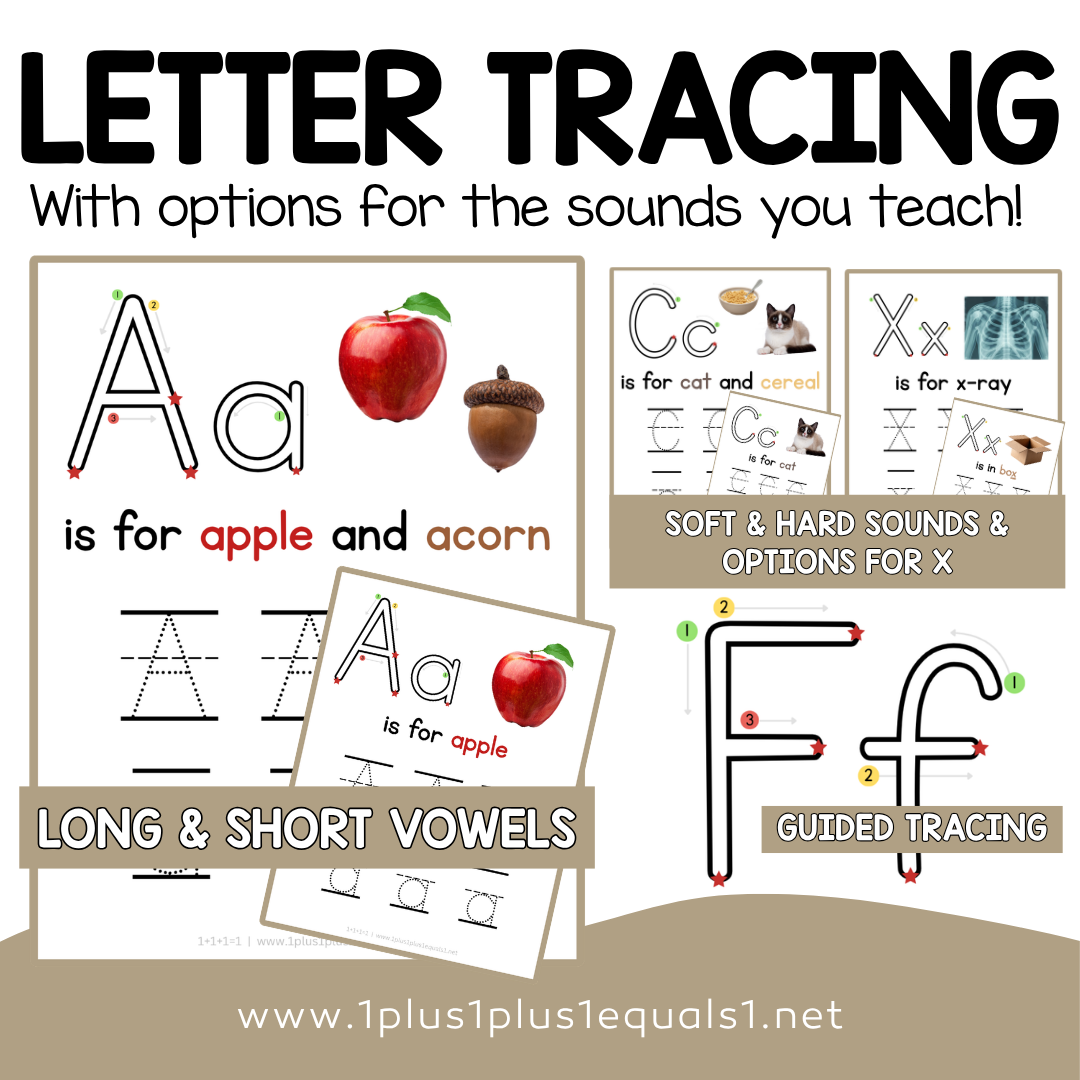
This set includes a tracing page for every letter from A to Z, with both uppercase and lowercase letter practice.
I wanted the pages to be simple enough for beginning writers without overwhelming them with rows and rows of letters. Each page provides focused practice along with a real photograph and a keyword to help reinforce the letter and its sound.
What’s Included?
- Uppercase letter tracing
- Lowercase letter tracing
- Letter formation practice
- A complete A to Z alphabet chart
- Carefully selected letter-sound keywords
- Beginning sound practice
- Real photographs
- Custom-designed tracing guides
- Letter strokes based on the Zaner-Bloser handwriting method
- Additional options for select letters and sounds
Clear Letter-Sound Keywords
Because clear letter sounds are so important for beginning readers, I was especially intentional about the words used to represent each letter.
I didn’t want to choose a word simply because it starts with a particular letter. I wanted the beginning sound of the word to be as clear as possible for a child who is learning to connect letters and sounds.
Some familiar alphabet words contain blends or sounds that can make it more difficult for a beginning reader to isolate the sound we are teaching.
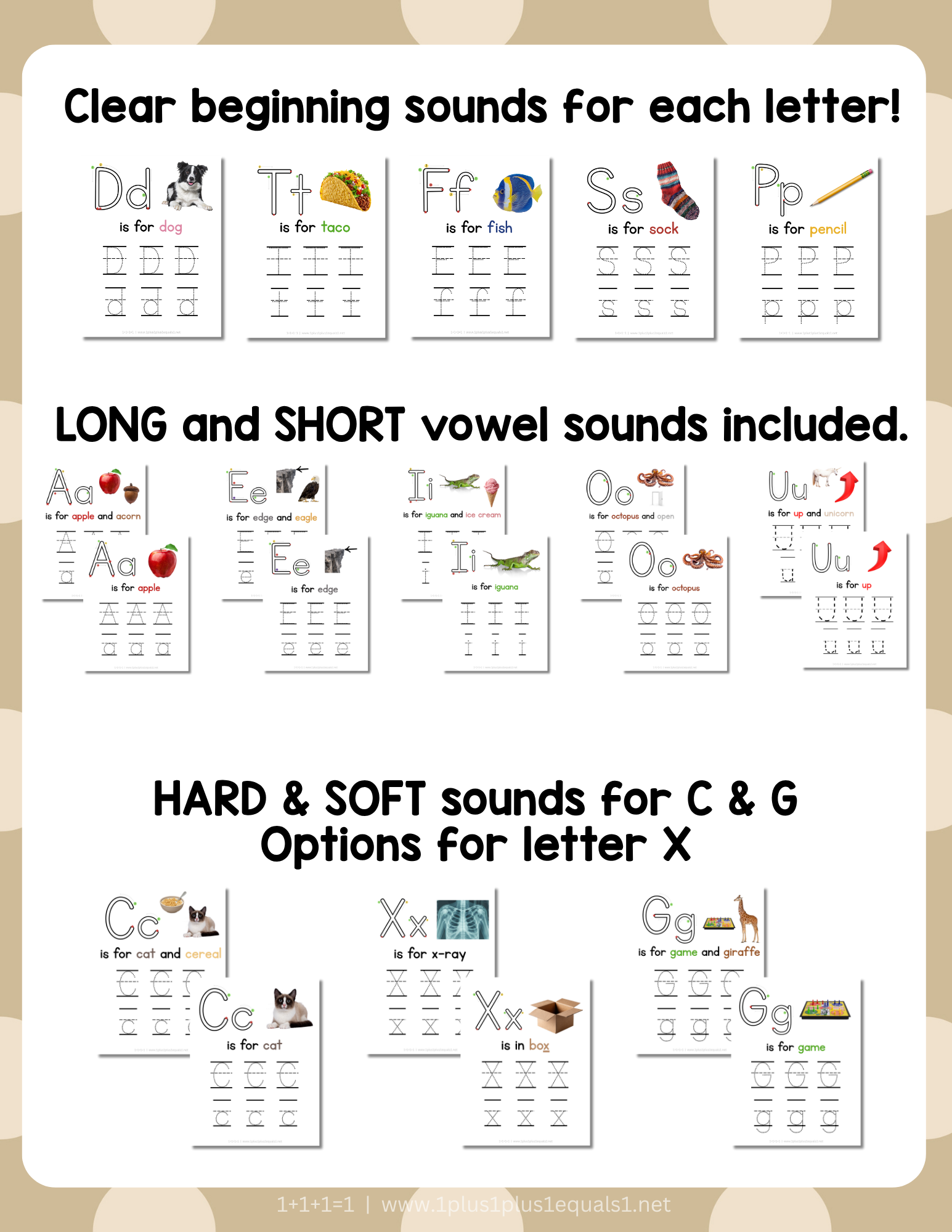
For example, D is represented by dog rather than dragon. The beginning of dragon contains a blend, which can make the /d/ less distinct. Dog gives children a much clearer opportunity to hear the /d/ sound.
I made similar choices with several other consonants:
- G: Game provides the hard /g/ sound. Giraffe begins with the /j/ sound, so it isn’t the clearest example when teaching the /g/ sound. There is a page that includes giraffe and game if you are introducing hard and soft sounds,
- S: Sock makes the /s/ sound easier to hear than a word such as star, which begins with a blend.
- T: Taco provides a clear /t/ sound. In train, the beginning blend can make that sound less distinct.
- X: Box is used to demonstrate the /k/ /s/ sound associated with X. Words such as x-ray and xylophone don’t provide that same sound at the beginning of the word. I did provide a page with x-ray for the letter X if you prefer that.
These may seem like small details, but the words children hear alongside letters can help reinforce the connections they are working to build.
When children can clearly hear a sound and connect it to the letter representing that sound, they are building important early reading skills. These sound-letter connections also play a role in orthographic mapping, the process that helps children store written words and their sound patterns in long-term memory.
I Was Intentional With the Vowel Keywords, Too
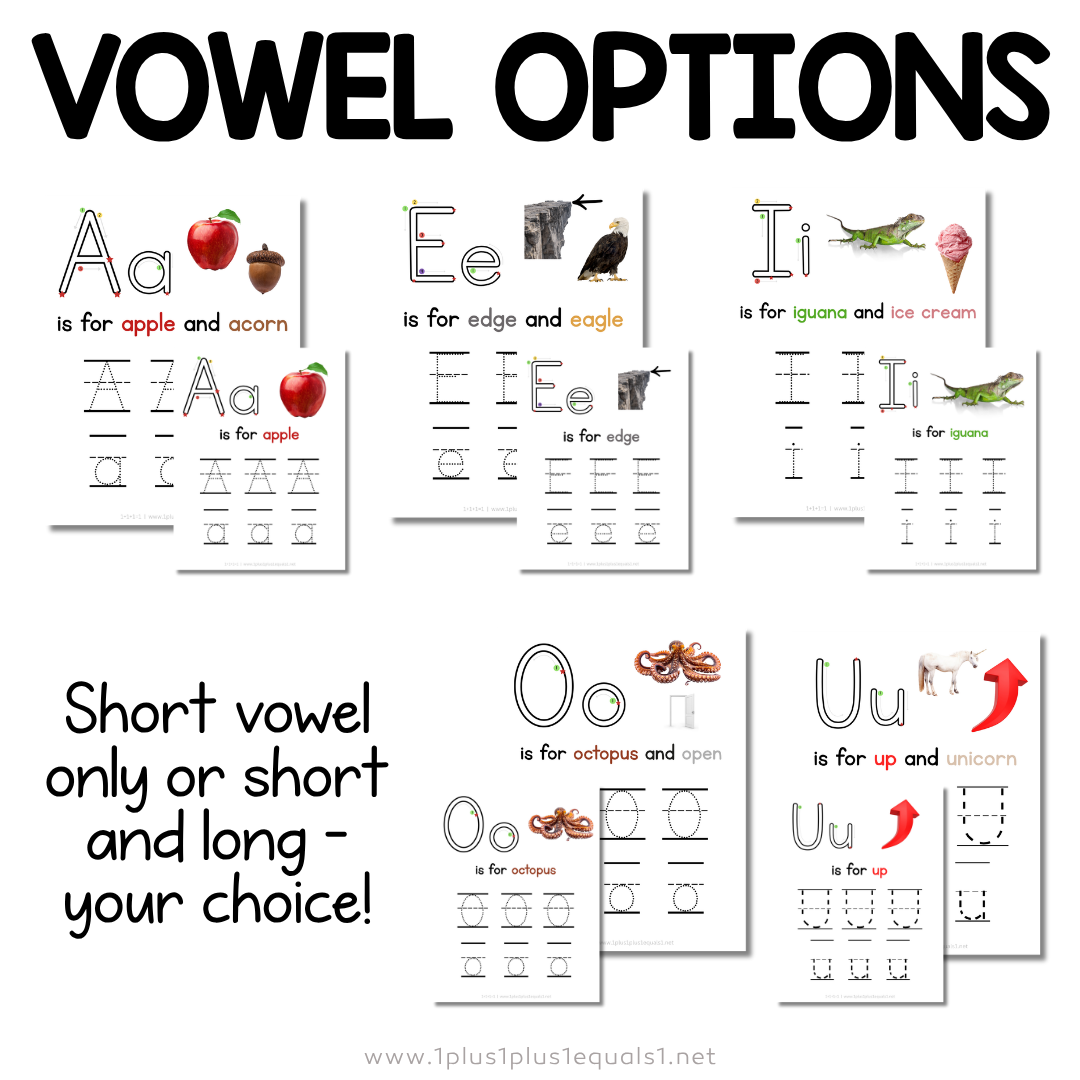
Vowels require some additional thought because the same letter can represent different sounds. For these beginning alphabet pages, I wanted the keywords to clearly demonstrate the short vowel sounds. There are pages that also feature the long sounds, in case you want to show both!
Here are some of the choices I made:
A is for Apple
For A, I chose apple to give children a clear example of the short /a/ sound. While ant is a common alphabet word, the beginning sound can be more difficult for a child to isolate. Therefore, apple is a straightforward choice for introducing short a. For the long vowel option, I included acorn.
E is for Edge
For E, I chose edge as a clear example of the short /e/ sound. Because some commonly used E words can be less consistent for beginning sound instruction, I wanted to provide a strong, recognizable short e sound. In contrast, the word eagle is used on the long vowel sound page.
I is for Iguana
For short i, I use iguana. In comparison, a word like insect begins with a blend, which can make the beginning sound harder to isolate. For the long vowel option, I use ice cream instead.
O is for Octopus
For O, I chose octopus rather than owl because octopus provides a clear short /o/ sound. On the other hand, owl begins with a diphthong, so it isn’t the clearest example for a beginning reader learning the short o sound. For the long vowel option, I use open.
U is for Up
For U, I use the simple word up to demonstrate the short /u/ sound. Additionally, you can add movement while practicing this letter. Say “up” while pointing upward, or use an umbrella and talk about opening it up! For the long vowel option, unicorn provides an example of the long u sound.
The goal behind all of these choices is simple: give children clear examples that help them hear the sound represented by each letter.
Real Photographs for Alphabet Learning
Another feature I intentionally included in this printable is real photography.
Each letter is connected to a real-world object or animal rather than relying on cartoon illustrations. Real photographs can help children make a visual connection between the letter, the word, and something they recognize from the world around them.
The combination of the letter, its sound, the keyword, and the photograph gives children several ways to interact with each letter.
A Custom Letter Tracing Guide
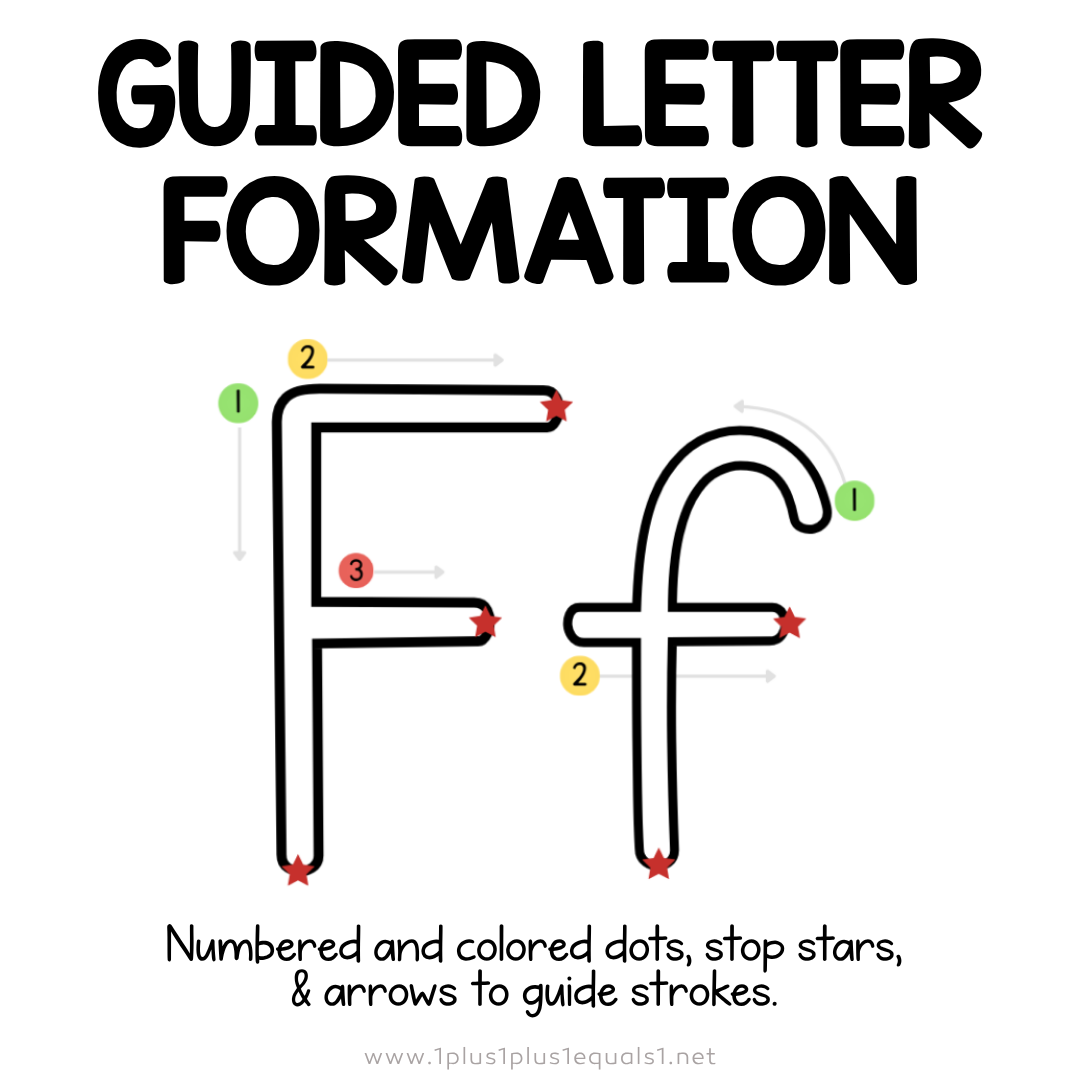
I also wanted the handwriting portion of these pages to provide more direction than simply placing a dotted letter on the page. I created the guides surrounding the letters myself, one arrow and dot at a time. It is truly a unique tracing guide.
Each letter has a custom-designed tracing guide with:
- Green dots showing where to begin
- Red stars showing where to stop and arrows guide stroke direction
- Letter formation based on the Zaner-Bloser handwriting method
These visual cues give beginning writers a clear place to start and help them practice forming letters with the correct strokes.
Why Only a Few Letters to Trace?
You may notice that these worksheets don’t fill the page with endless rows of letters.
That was intentional!
For a young child who is just learning to write, a page packed with letters can feel overwhelming. I prefer giving children a manageable amount of focused practice so they can concentrate on how they are forming the letter instead of simply trying to finish the worksheet.
Make the Letter Tracing Worksheets Reusable
Want to use the pages over and over?
Place a worksheet inside a sheet protector and use a dry-erase marker. Your child can trace the letters, wipe the page clean, and practice again.
This is an easy way to get repeated handwriting practice without printing a new page every time.
Get the Free Letter Tracing A to Z Printable
I’ve made this complete Letter Tracing A to Z set available as a new email subscriber freebie!
Join my email list, and you’ll receive the complete printable for free, along with future freebies and updates from 1+1+1=1.
CLICK HERE TO SIGN UP FOR OUR EMAIL LIST
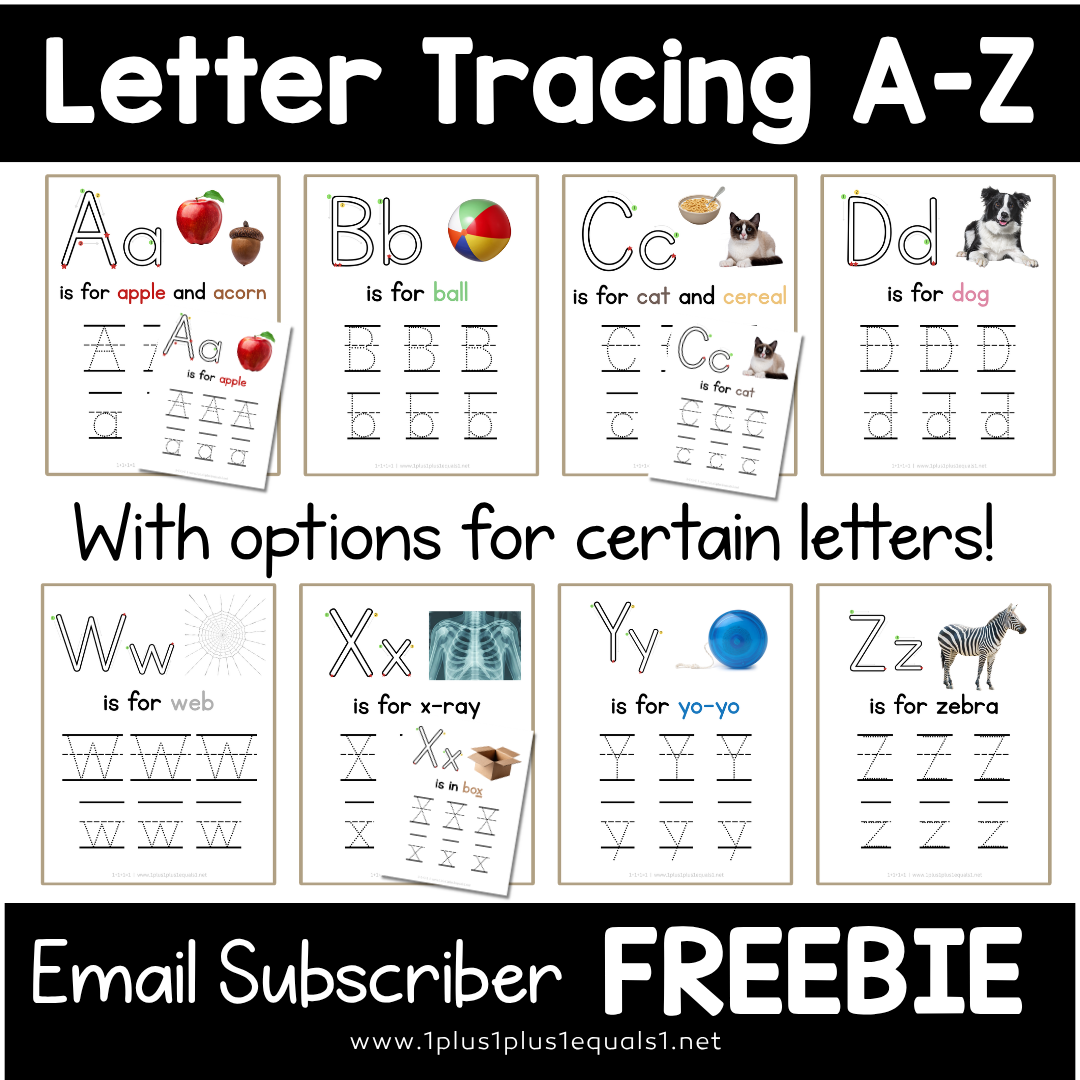
I hope these alphabet tracing pages give you an easy, low-prep way to work on letter formation, letter sounds, and early reading skills with your child.
Want the Printable Without Joining the Email List?
Want to purchase the printable instead? Letter Tracing A to Z is also available in my shop.
Looking for Even More Alphabet Printables?
If you are looking for more alphabet resources, be sure to check out The ABC Vault!
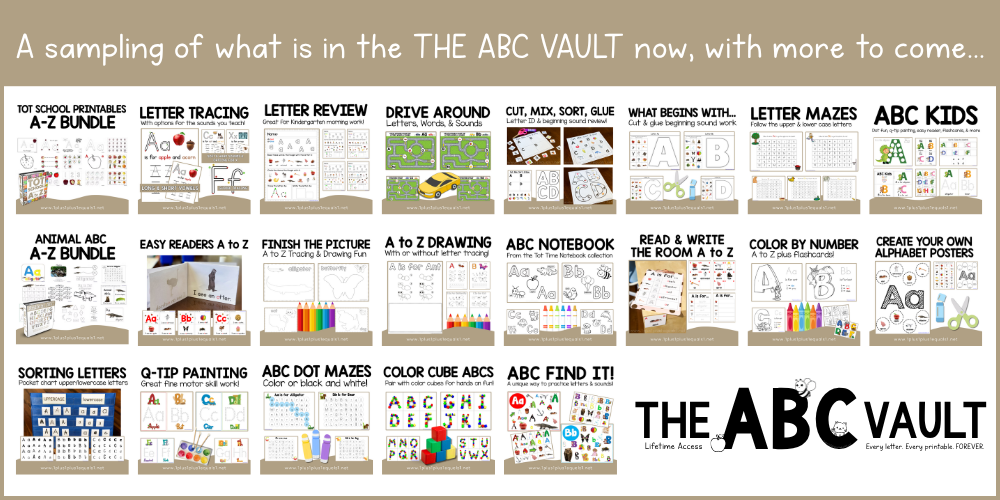
Every letter. Every sound. Every printable. Forever.
The ABC Vault is my growing collection of alphabet printables, including resources for:
- Letter recognition
- Uppercase and lowercase letters
- Handwriting
- Letter sounds
- Phonics
- And more!
One purchase gives you lifetime access to everything currently in the Vault, plus every new alphabet printable I create in the future.
No subscription. No recurring fees. Just one growing collection of A to Z learning resources.